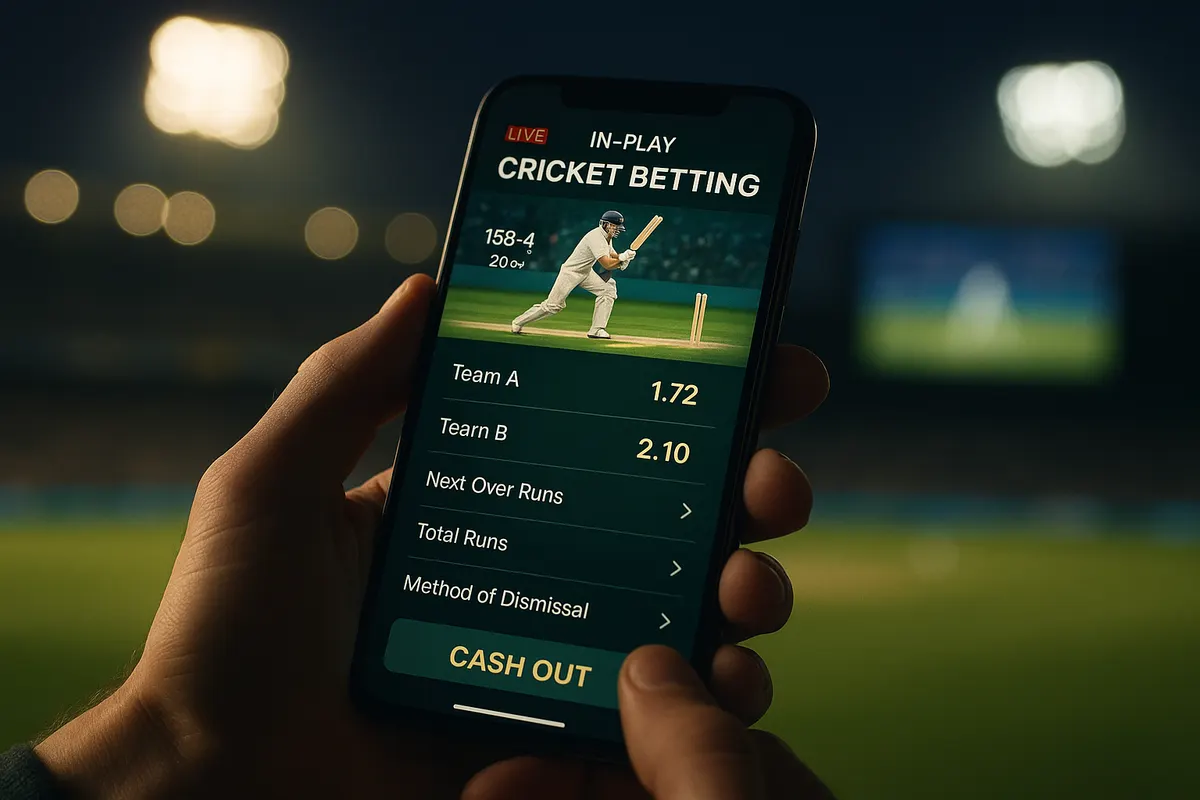
What a Flexible Sportsbook Platform Means for Players: Better Odds, Markets & Features
Ever placed a bet on a cricket match, watched the second ball go for six, and found the in-play odds still frozen on the pre-match price? That lag is not bad luck. It is a symptom of the software underneath, and it tells you more about a bookmaker than any welcome offer ever will. A flexible sportsbook platform is the difference between a site that reacts to the game and one that makes you wait for it.
Operators talk about platform flexibility at trade shows. Altenar, one of the sportsbook technology suppliers that licenses its platform to operators, is pitching exactly that at SBC Summit 2026 in Lisbon, an event the organisers expect to draw around 40,000 industry professionals. Useful for them. But what does any of it mean when you are the one with ₹500 on the line? Let’s walk through one evening of betting and find out.
What “flexible” actually means when you are the one placing the bet
Strip away the jargon and a flexible sportsbook platform is one that can change quickly: change its prices, add markets, plug in new payment methods, adjust limits, and push all of that to your phone without breaking. Rigid platforms can’t. They ship one fixed set of markets, update odds on a slow cycle, and suspend betting at the first sign of trouble because the risk management system can’t keep up.
The plumbing you never see
Behind any sportsbook sit three moving parts. A data feed delivers live scores and events. An odds compilation and risk engine turns that data into prices and decides how much exposure to accept. A front end shows you the betting interface. Flexibility means those three talk to each other fast, and that the operator can configure the middle layer for its own audience instead of accepting whatever the supplier shipped by default.
You never see any of it. You only see the symptoms.
What flexibility looks like on your screen
- Market depth that goes beyond match winner and total runs.
- In-play prices that move within a second or two of a wicket, not fifteen.
- Short betting suspensions instead of markets going dark for whole overs.
- Features that actually work: cash-out, partial cash-out, bet builder, live streaming.
- Deposit and withdrawal methods that suit where you live, in your own currency.
- A mobile experience that is the same product as the desktop one, not a stripped-down cousin.
How platform flexibility improves your betting options
Back to our Friday night. Say it’s an India versus Australia T20 and you open two sportsbooks side by side, which is a habit worth building.
Market variety and coverage
The rigid book offers maybe a dozen markets: match winner, top batter, total sixes, a handful of over/unders. The flexible one offers those plus runs in the next over, method of next dismissal, player run bands, partnership totals, and a long tail of props that keep refreshing as the innings unfolds. That depth is a platform capability. Every extra market needs data, pricing logic and a risk limit attached to it, and the platform has to generate all three automatically or it isn’t happening.
More markets is not automatically better for you, mind. Obscure props usually carry a fatter margin than the main match-winner line. But depth gives you choice, and choice is where a bettor who does their homework finds the occasional price that looks mispriced.
Odds competitiveness and the margin question
Here is the part most bettors skip. The price you get is the true probability plus the bookmaker’s margin, also called the overround. Better pricing technology lets an operator run a thinner margin because its risk engine manages exposure more precisely. Thinner margin, better prices for you.
The math on a two-way market is easy to check yourself. Convert each decimal price to implied probability (1 ÷ odds), add them up, and anything above 100% is the book’s edge.
| Two-way prices | Implied probability each | Book total | Margin |
|---|---|---|---|
| 1.98 / 1.98 | 50.5% | 101.0% | ~1.0% |
| 1.95 / 1.95 | 51.3% | 102.6% | ~2.5% |
| 1.90 / 1.90 | 52.6% | 105.3% | ~5.0% |
| 1.83 / 1.83 | 54.6% | 109.3% | ~8.5% |
Two rupees of difference per unit staked doesn’t feel like much on one bet. Across a season it is the single biggest controllable factor in your results. Run this calculation on the cricket, football and kabaddi markets you actually bet, and you’ll rank your sportsbooks honestly in about ten minutes.
Live betting responsiveness
Ball nine, and the opener edges to slip. On the flexible book, markets suspend for a couple of seconds, reprice, and reopen. On the rigid one, the whole in-play section sits suspended while a human trader catches up. Every extra second of suspension is a bet you wanted and could not place. Persistent bet rejections and “odds have changed” pop-ups point the same way: the platform can’t price fast enough to accept your stake with confidence.
The features that only good engineering makes possible
Betting cash-out and partial cash-out
You took India at 2.10 for ₹1,000 before the toss. They’re now 90 for 1 chasing a modest total and the book offers ₹1,540 to settle now. Cash-out exists because the platform can re-price your open bet continuously against current live odds, which means it needs the same pricing engine running your settled and unsettled positions at once. Rigid platforms either don’t offer it or offer it only on a narrow list of markets.
Partial cash-out goes a step further: take ₹900 out now and let ₹400 of the original stake ride at the original price. Genuinely useful when a game turns and you want to reduce exposure without abandoning your read.
The honest caveat: cash-out values are calculated from the current odds with the bookmaker’s margin baked in again. Over many bets, routinely cashing out gives up a slice of expected value compared with letting bets stand. It is a risk control tool, not a clever way to squeeze extra money out of a book. Nothing here changes the basic fact that bookmakers hold a mathematical edge over time.
Bet builder tools
Want India to win, a specific batter to top-score and the match to go past 320 total runs, all in one slip? A bet builder has to price correlated selections, because those outcomes are not independent, and it has to do it in real time as you toggle legs on and off. That is a serious piece of odds compilation, and it is the clearest single tell of a modern platform. Multi-leg builders also stack margin leg by leg, so the combined price carries more edge for the house than any single selection. Fun, yes. Cheap, no.
Mobile, multi-device and streaming
You started the evening on a laptop, moved to your phone during dinner, and the bet slip followed you with the same markets and the same cash-out button. That is mobile optimisation done properly, plus session handling that doesn’t log you out every twenty minutes. Integrated live streaming sits in the same bucket: it requires rights, geo-controls and a player embedded next to live markets, which only works when the front end is built to be reconfigured rather than hard-coded.
Why sports betting technology matters more for Indian bettors
Cricket coverage, not cricket as an afterthought
A platform built for European football and lightly localised will give you IPL and international fixtures and stop there. A platform configured for this market goes deeper: domestic tournaments, women’s cricket, kabaddi, and ball-by-ball in-play markets rather than just innings totals. The same applies to interface details like Hindi-language options and IST-aligned fixture lists. None of that is glamorous. All of it is configuration the platform either supports or does not.
Rupees, payments and the KYC queue
Payment integration is where flexibility gets very concrete very fast. Rupee wallets mean no currency conversion shaving your balance on every deposit and withdrawal. Local methods, UPI among them, mean deposits land in seconds rather than hours. Withdrawal speed depends partly on the payment layer and partly on how well the operator has automated KYC, which is why some books verify documents in a day while others leave you waiting a week.
Two practical points. Rules on real-money online betting in India differ by state and have been changing, so check what applies where you live before you deposit anywhere. And winnings from online gaming are taxable in India, with TDS deducted on net winnings, so factor tax into your record keeping rather than treating a cashout as clean profit. For anything specific, talk to a tax professional.
Judging a sportsbook’s platform before you deposit
You cannot audit anyone’s back end, but you can read the signals. Spend twenty minutes with a free account and check:
- Margin on your core markets. Run the implied-probability sum above on three or four fixtures you’d genuinely bet. Compare two or three books.
- In-play behaviour during a live match. How long do markets stay suspended after a wicket or a goal? How often are your stakes rejected?
- Feature coverage. Is cash-out available on in-play and multiples, or only on a token list? Is partial cash-out there? Does the bet builder cover cricket or only football?
- Market depth mid-event. A book that adds next-over and next-dismissal markets as the innings progresses is running capable pricing tech.
- Limits and the small print. Low maximum stakes and vague void rules often mean weak risk management underneath.
- Licence and payments. A named regulator, rupee support, working UPI, and a published withdrawal timeframe.
Several operators licence their platform from suppliers such as Altenar rather than building their own, which is why two unrelated brands can feel almost identical to use. The supplier is worth noting if you’re curious, but judge what is in front of you: prices, speed, features, payouts. That is the product you are actually buying. Our sportsbook reviews apply these same checks site by site, and the betting strategy guides go deeper into reading odds and margin.
One last thing that no amount of platform quality changes: the book holds an edge on every market it offers, and a slicker interface makes it easier to bet more, not easier to win. Set deposit and loss limits, use the session reminders and cool-off tools your account provides, and treat betting as paid entertainment. If it stops feeling that way, our responsible gambling resources list support options. Betting is for adults of legal age only.
FAQ
What is a flexible sportsbook platform?
It is sportsbook software that an operator can adapt quickly: repricing odds in real time, adding or removing betting markets, plugging in local payment methods, and adjusting limits per market. For players, it shows up as deeper markets, faster in-play odds, shorter suspensions and working features like cash-out.
How does sportsbook technology affect players?
It sets your prices, the range of markets you can bet, how fast live odds update, whether cash-out and bet builder exist, and how quickly deposits and withdrawals clear. Better pricing technology also lets an operator run a thinner margin, which directly improves the odds you receive.
What features make a good sportsbook?
Competitive margins on the markets you actually bet, deep in-play coverage of your sports, cash-out and partial cash-out, a bet builder that works on cricket, integrated streaming, rupee accounts with local payment methods, fast KYC and withdrawals, plus visible responsible gambling tools and a named licence.
Does cash-out give better value than letting a bet run?
Usually not. Cash-out prices are derived from current odds with the bookmaker’s margin applied again, so over many bets it costs you expected value. Use it to manage risk on a position you no longer like, not as a strategy for beating the book.
Tagged: cash-out India betting live betting sports betting technology sportsbook